Приглашение в путешествиеPriglasheniye v puteshestviye
Invitation to a Journey
I stood in Fate’s queue for a thousand roubles of tickets.
Tarkovsky’s “faraway countries” are his childhood in Elisavetgrad, today’s Kropyvnytskyi: “the town of Blessed Childhood and the town of Kindred Graves.” His daughter Marina Tarkovskaya, in her book Sudba moya sgorela mezhdu strok (“My fate burned down between the lines”), dates the poem to 1937 and writes that going back to his home town was a long-held wish of his. It came true in 1955, “eighteen years later.” Other printings date the poem 1945.
No book of his carried it in his lifetime: the 1991 collected works print it among the “poems published in periodicals during the author’s lifetime.”
The poet’s elder brother, Valery, was killed in 1919 fighting the forces of ataman Grigoriev.
Behind the scenes
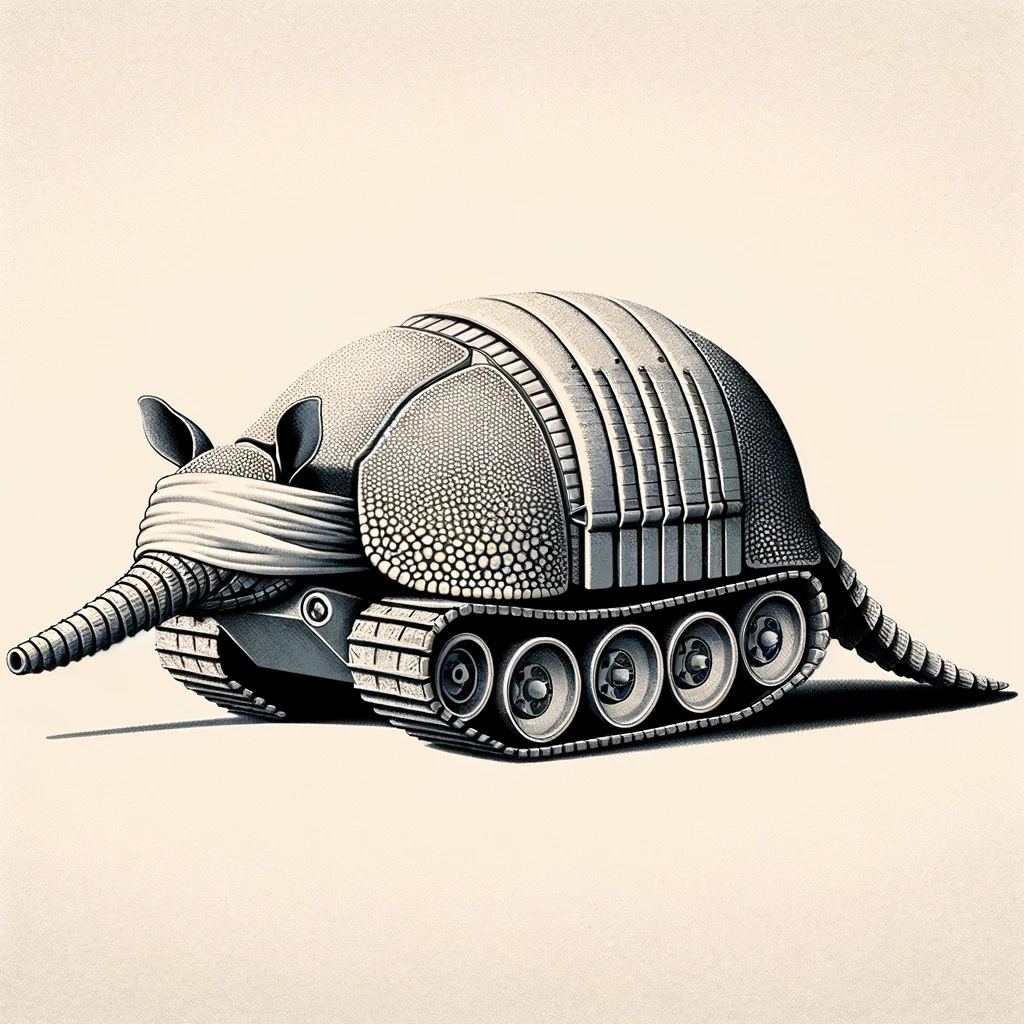
Funnily enough, the battleship in tarpaulin — in Russian a bronenosets, which is also an armadillo — may be the very one that would have been on the album’s cover, had it ended up as “Tarkos”ended up as “Tarkos” after all.
Lyrics
The translation is a crib, not a singing version.
Music: Vova Zakharov
Lyrics: Arseny Tarkovsky