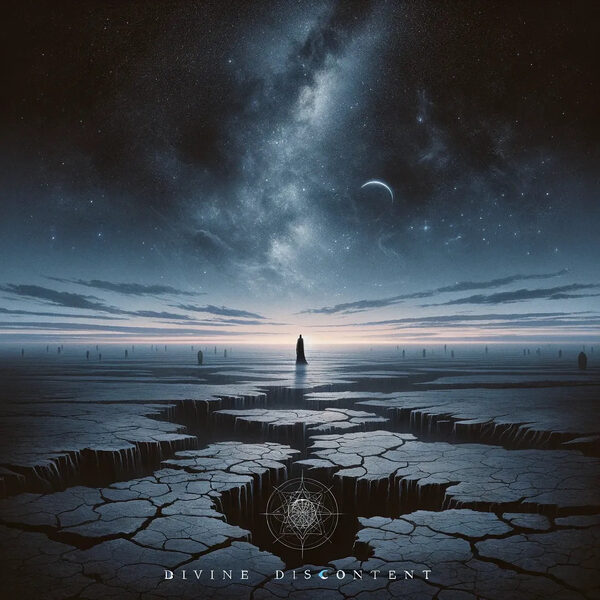
A deity is born into the void, and there is no one in the void but the deity. It can make whole worlds, and there is no one to show them to. So, out of loneliness, it makes man, in its own image — and man names it God, and gives it a face like his own, and from then on God is a he.
Man turns out to be the most troublesome of all God’s works. He invents religions that bear God’s name and have nothing of God in them, does mad things in his honor, and in time forgets him altogether. Age after age the discontent builds, until the god who made man so as not to be alone decides to destroy him.
Behind the scenes
The name grew out of the theme of gods, which I’d had in mind since my Jukebox days, and out of a phrase I heard somewhere — I don’t remember the context — that jumped right out at me: “divine discontent.” In everyday English it’s an idiom for a noble kind of restlessness, a dissatisfaction with things as they are that drives people to improve, to create, to reach higher. But I read it straight away as a deity’s discontent, and the album is built on that pun.
Now that I think of it, the idiomatic meaning, taken literally, works too: out of that noble restlessness God “wanted the best, but it turned out as always,” as Chernomyrdin put it.